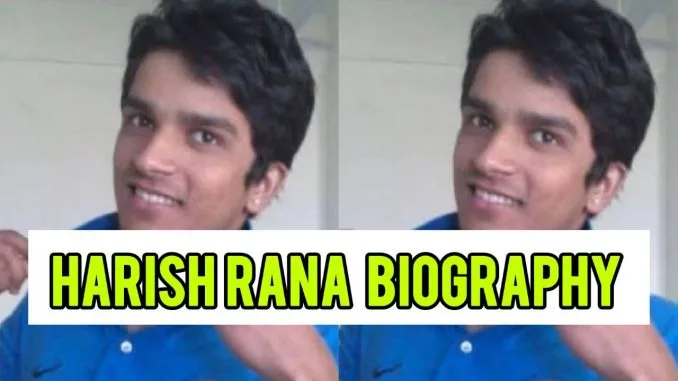
Harish Rana Biography
Harish Rana was born on August 10, 1994, in Uttar Pradesh, India. As a child he showed focus and curiosity, and his parents encouraged his studies. He later moved to the Chandigarh region to study engineering and lived in a paying-guest accommodation while attending Panjab University. Before the accident that changed his life, people who knew him remember a young man full of plans — active, studious and with a bright future in engineering. Harish Rana is 31 years old as of 2026.
His family’s sacrifice became part of the public story. They devoted years, time and savings to keep him alive, giving him constant nursing, physiotherapy and medical supervision. To cope with long-term care, they sold property and rearranged their lives. The private pain of waiting beside an unresponsive loved one slowly moved into public view as the case reached Indian courts and then the national conversation on dignity and end-of-life choices.
Harish Rana Career
Before the accident, Harish was a student and had not yet begun a professional career. He was enrolled in an engineering program and planned a career in civil or mechanical engineering after graduation. His studies at Panjab University were the stepping stone most young engineers use to reach internships, jobs and practical work in industry and government projects.
After the accident, the question of career changed meaning. Harish’s life no longer followed the path of education to employment. Instead, his story forced others to think about how long families can sustain care, how medical systems respond to prolonged vegetative states, and how law and medicine meet where recovery is no longer possible. In this way, his name and case influenced public debate, legal practice and medical ethics across India — a very different legacy from the one he might have imagined before 2013.
Harish Rana Euthanasia Case
On the day that marked a turning point in his life — Raksha Bandhan in August 2013 — Harish fell from the fourth floor of his paying-guest accommodation. The fall caused severe head injuries and left him in a persistent vegetative state. Medical teams reported catastrophic brain damage and complete paralysis; he lost conscious awareness and required long-term artificial support including a tracheostomy for breathing assistance and a gastrojejunostomy feeding tube for nutrition.
For more than thirteen years he remained in that condition, dependent on round-the-clock nursing and medical attention, while his parents cared for him with devotion. The sheer length of his illness and the continuous personal and financial strain on his family eventually led them to seek legal permission for withdrawal of life-sustaining treatment. The Supreme Court of India reviewed the evidence and medical records and, in a landmark decision in March 2026, allowed passive euthanasia in his case — permitting doctors at a national hospital to admit him for palliative management and to withdraw artificial life support in accordance with medical guidelines.
Medical experts explained that Harish would be transferred to the palliative care unit at the All India Institute of Medical Sciences (AIIMS) where the focus would be comfort, dignity and symptom control rather than aggressive life-prolonging treatment. In palliative care the aim is to keep the patient pain-free and comfortable while allowing nature to take its course. Doctors there do not use invasive interventions aimed at curing the underlying neurological damage when medical assessments show recovery is not possible. They focus on nursing care, pain relief and emotional support for the family while stopping interventions that merely prolong biological functions. The court entrusted AIIMS to make the necessary arrangements and oversee the process with sensitivity and professional standards.
The legal process that led to the Supreme Court decision was long and careful. Harish’s parents first petitioned courts at lower levels before approaching the apex court. The bench that heard the final plea included judges who examined detailed medical reports, testimonies from treating physicians and the years of treatment records. The court noted that doctors had concluded there was no realistic chance of neurological recovery and observed the immense emotional toll the situation had taken on the family.
In its reasoning, the court reflected on deep questions about life, suffering and human dignity. In one striking moment, the bench quoted William Shakespeare’s famous existential line to underline how families and courts wrestle with the hardest human choices. The verdict allowed withdrawal of life-sustaining treatment under strict safeguards and directed that Harish be admitted to AIIMS for palliative care and monitored so that the process remained humane and medically sound.
The court’s ruling in the Rana matter did not emerge from a blank legal field. It rests on a line of earlier decisions and legal evolution around the right to die with dignity. Indian jurisprudence has moved from an earlier, restrictive view about suicide and euthanasia to a more nuanced position that recognises dignity in dying under strict conditions. Cases such as the Aruna Shanbaug judgment and the later Common Cause decision shaped the legal landscape by allowing passive euthanasia and recognising advance directives under tightly controlled procedures.
The Rana judgment applied these principles to an individual situation where medical boards had concluded that continued treatment only prolonged biological life without meaningful consciousness or prospects of recovery. Legal scholars note that this case is the first full application at the Supreme Court level allowing withdrawal of life support for an individual patient under current rules, and it may prompt lawmakers to consider clearer statutory rules for end-of-life decisions.
What will change in Harish’s daily care as a result of the order is concrete. Medical teams said they would stop aggressive diagnostic or life-prolonging procedures such as intensive ventilation or invasive tests that aim only to keep organs functioning longer. Nutrition and hydration through tubes may be gradually withdrawn under medical supervision while ensuring that pain and distress are managed.
The process does not mean active killing; rather, it means allowing the natural course of the illness to occur without artificial prolongation. Doctors emphasise that predicting exactly how long a person will survive once supports are withdrawn is impossible; some younger patients may continue to breathe and live for days, weeks or longer. The aim in palliative care is always to prevent suffering and support the family through the period of farewell.
The Rana case has stirred a wide and honest debate in India. Supporters of the court’s decision argue that keeping a person alive indefinitely without hope of recovery can be a source of pointless suffering for both patient and family, and that allowing a dignified end is an act of compassion.
Opponents worry about moral and ethical slippery slopes and urge caution so that vulnerable lives are not endangered. For Harish’s parents, however, the question was deeply personal: after more than a decade beside their son, they believed that letting him go with dignity was the most humane choice. The ruling therefore stands at the intersection of law, medicine and family grief, and it will likely remain a reference point in India’s ongoing conversation about end-of-life care and statutory safeguards.
Conclusion
The life of Harish Rana moved from everyday promise to a public story about suffering, devotion and legal change. Born in Uttar Pradesh and once a student at Panjab University, Harish’s tragic accident led to a long and costly period of care that tested his family’s limits. The Supreme Court’s decision to permit passive euthanasia in his case applies a legal framework developed over years and places medical dignity at the centre of a painful choice. Whatever one’s view of euthanasia, this case forces a public reckoning about how societies care for those in permanent vegetative states, how courts should balance compassion and law, and how families can be supported when they face years of unending care.
FAQs
What exactly did the Supreme Court permit in the Harish Rana case?
The court allowed passive euthanasia in his situation, meaning doctors can withdraw medical treatments that only artificially prolong biological life and can admit him to a palliative care unit to ensure comfort and dignity while stopping invasive life-prolonging interventions.
Where will Harish be cared for after the court order?
The court directed that he be admitted to the All India Institute of Medical Sciences (AIIMS) where palliative care teams will oversee his comfort and the careful withdrawal of life-sustaining measures.
What caused Harish’s condition?
He suffered severe brain injury after falling from the fourth floor of his paying-guest accommodation in August 2013 while a student at Panjab University. The injury led to permanent neurological damage and a persistent vegetative state.
Is this the first time Indian courts allowed euthanasia?
Indian courts previously recognised passive euthanasia under strict safeguards in earlier cases and recognised advance directives; the Rana decision is significant as an application of those rules in an individual case where the Supreme Court authorised withdrawal of life support for the patient. The ruling builds on prior jurisprudence and has been widely discussed by legal experts.

Kathy Jane is a writer who specializes in public administration and media communication. She has 17 years of experience covering these fields and keeping up with their main trends. Kathy holds a BSc and an MSc in Mass Communication, giving her the skills to explain government and media topics in clear, easy-to-understand language.
Leave a Reply