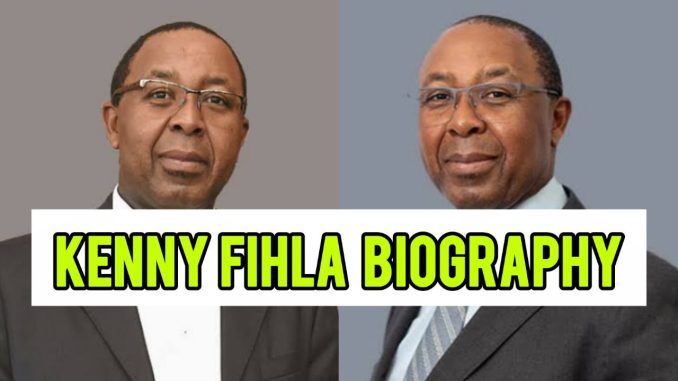
Kenny Fihla Biography
Kenny Fihla was born on February 18, 1967, in Cape Town, South Africa. His school and university years set the foundation for an unusual career path: he first trained as an engineer, which taught him to think in practical, step-by-step ways, then he moved into economics and finance as his professional interests matured. That mix of engineering logic and financial skill is a theme that runs through his story: someone who learned to solve hard problems, then learned to measure the returns of those solutions. Kenny Fihla is 59 years old as of 2026.
Kenny Fihla Career
Fihla’s career shows a steady shift from public infrastructure work into high-level banking and corporate leadership. He worked in municipal and city roles early on, where his engineering training met budget and planning duties. This practical start helped him move into the private financial sector and later into major bank leadership.
In mid-2025 he took up the top job at Absa Group, becoming Group Chief Executive Officer in June. His appointment was one of the most watched moves in African banking that year and followed his sudden resignation from Standard Bank Group after 18 years of service. News outlets reported the transition widely because it reshaped leadership at two of South Africa’s largest financial groups.
The first months of his leadership at Absa were marked by strong financial results for the group and by a large remuneration package that attracted headlines. Absa’s 2025 annual results showed a 12% rise in headline earnings and solid growth across the bank’s African operations. The results give context to the group’s decision to reward executives and to pay dividends to shareholders while also raising staff pay. As chief executive, Fihla highlighted the bank’s diversified earnings, the growth of its corporate and investment banking unit, and improved credit outcomes in South Africa as reasons for the strong performance.
Fihla’s move from Standard Bank to Absa also included negotiated payments that compensated him for awards he forfeited when he left his old employer. In 2025 his total reported remuneration related to his appointment and the short reporting period at Absa reached roughly R148 million. That figure combined a cash buyout award, share-based awards, short-term incentives for the six-and-a-half months he had served, and his fixed pay.
News reports detailed the buyout and incentive components and compared them with similar on-appointment awards made to incoming executives at other banks, arguing such awards are now common when a senior executive moves between large institutions. The reporting emphasised that bankers who change employers often receive awards to replace bonuses and equity they leave behind.
Before joining Absa, Fihla’s long tenure at Standard Bank saw him run major parts of the corporate and investment banking franchise and later serve as Deputy Chief Executive of the group and CEO of Standard Bank South Africa. His leadership helped the corporate and investment business grow markedly, and he became recognised across the continent for his knowledge of transaction banking, client coverage and strategic expansion into African markets. Colleagues describe him as a technocratic leader who blends operational detail with big-picture strategy, and that blend made him attractive as a leader for a pan-African banking group seeking to balance local and regional ambitions.
Kenny Fihla Personal Life
Fihla keeps his private life largely away from public scrutiny. He is a private person by nature and rarely discusses family details in the press. That said, profiles note his roots across South Africa and how his early life shaped a practical approach to leadership. The engineering background that preceded his move into finance gives him a reputation for methodical problem solving. People who have worked with him point to an executive who prefers clear targets, disciplined execution and measurable performance.
Outside the office, he is known to support development programs and to take an interest in projects that combine economic growth with social benefit. He is described by peers as a leader who values mentoring and who believes in preparing the next generation of bank managers and technocrats. Because of his desire for privacy, specific personal details such as family names or close social circles are not widely available in public documents, and media profiles focus mainly on his professional achievements and public leadership roles.
Kenny Fihla Latest Business Trend
The most visible business trend around Fihla in 2025 and into 2026 is the way banks now use buyout and on-appointment awards to recruit senior leaders and to keep talent moving between big groups. His rewards package at Absa combined immediate cash with share-based awards and deferred incentives. That mix reflects a broader shift in executive hiring, where companies compensate for forfeited deferred pay at a prior employer.
The practice is intended to ensure leaders can transition without being financially penalised for leaving a previous employer’s incentive plans. It also aligns incentives across the new employer’s strategic horizons so that leaders remain motivated to deliver long-term value rather than short-term gains. Commentators point out that these arrangements change how investors and boards think about pay, retention and performance metrics, and Fihla’s package became a practical example of the new norm.
At the same time, Absa’s 2025 results show that the bank’s growth story is not only about executive changes. The group recorded headline earnings growth of about 12% and notable improvements in income generation across its African regions. Non-interest income and trading revenue were important contributors, while credit impairments improved in South Africa.
The company’s assets and liabilities both grew, and the bank returned dividends to shareholders while increasing staff wages modestly. For customers and investors, the message was that disciplined execution, a clearer client focus and selective geographic expansion can deliver steady results across cycles. As CEO, Fihla emphasised these themes: better operating models, sharper client focus and improved credit outcomes. Those priorities will likely shape Absa’s strategy under his leadership and influence competitors who watch how the group reallocates capital across Africa.
The pay story also sparked public debate about fairness, talent mobility and corporate governance. Analysts compared Fihla’s package with similar awards made to other incoming executives at large South African firms, showing a pattern where companies use large one-off awards to make the executive whole when they move. The debate looks at whether these awards are appropriate, how they should be disclosed and how boards ensure that pay matches long-term performance. For banks operating across volatile markets, the balance between retaining talent and rewarding performance will remain a top governance question.
Conclusion
Kenny Fihla’s rise to lead one of Africa’s biggest banking groups is a story of technical skill meeting commercial judgment. From an early life shaped by different South African provinces to a career that combined engineering thinking and financial leadership, he reached the top of the continent’s banking industry. His move from a long career at Standard Bank to the helmsman role at Absa changed the leadership landscape and came with a remuneration package that illustrated new industry practices.
Under his watch, Absa reported solid financial growth, and his strategic focus on client service, operating model changes and pan-African growth will shape the group’s next chapter. Whether one focuses on his management style, the debate over executive pay, or the bank’s performance metrics, Fihla’s tenure at Absa will be a key case for how big banks manage leadership, incentives and long-term growth in Africa.
FAQs
How much did Kenny Fihla earn in 2025?
Reports show that his total reported remuneration related to his appointment at Absa in 2025 reached roughly R148 million, including buyouts, incentives and fixed pay.
When did he become CEO of Absa Group?
He took office at Absa Group in June 2025 after leaving Standard Bank earlier that year.
Where did he work before joining Absa?
Fihla spent about 18 years at Standard Bank Group in senior roles, including leadership of the corporate and investment bank and a deputy CEO role.
Why did his pay package attract attention?
The package combined cash and share-based buyout awards to compensate forfeited awards from his prior employer, illustrating how banks now structure on-appointment compensation to attract senior talent.
How did Absa perform in 2025 under his leadership?
Absa reported a 12% rise in headline earnings for 2025, stronger regional growth across its African operations, and improved credit outcomes in South Africa—results that management linked to focused execution and strategic priorities.

Kathy Jane is a writer who specializes in public administration and media communication. She has 17 years of experience covering these fields and keeping up with their main trends. Kathy holds a BSc and an MSc in Mass Communication, giving her the skills to explain government and media topics in clear, easy-to-understand language.
Leave a Reply